
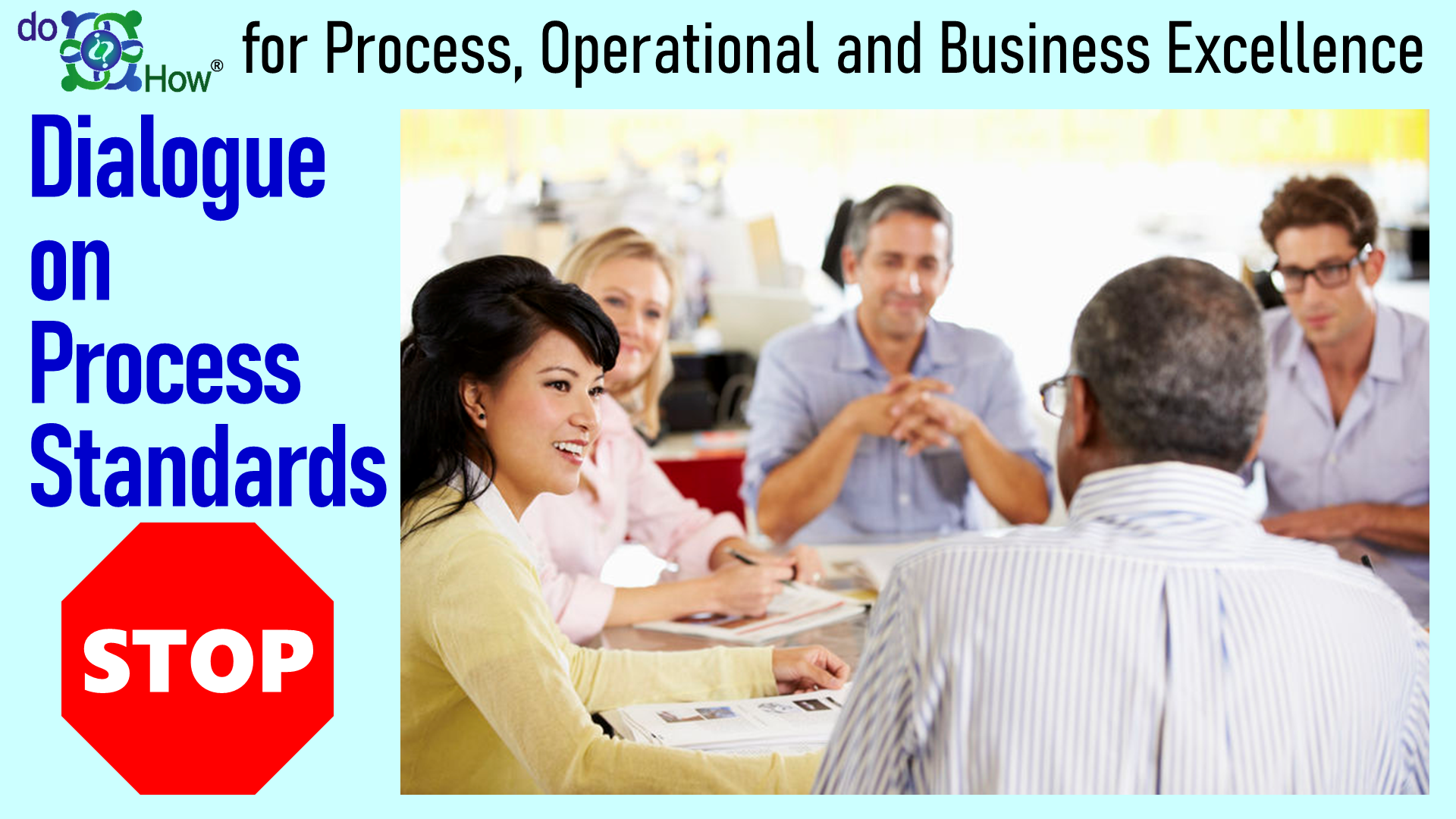
In today’s fast-paced business world, achieving excellence requires a robust foundation of well-defined processes. Recently, I had the privilege of discussing this vital topic with a client, exploring how proactive development, training, implementation, and continual improvement of process standards can transform organizations. These standards act as the compass guiding teams towards consistent performance, fostering a harmonious work-life balance, and paving the way for accelerated career growth—a journey where success becomes effortless and enduring.
Let me first share my thoughts on the purpose of process standards by examining their impact across key organizational functions:
Research and Development
Process standards enable ordinary individuals to consistently conceptualize, design, and develop innovative, eco-friendly products and services. These products meet both known and latent market needs, all while maintaining affordability. Like the steady rhythm of a metronome, well-defined processes ensure creative breakthroughs occur reliably and sustainably.
Sales and Marketing
In sales and marketing, process standards help teams, of normal people, consistently promote and secure profitable orders. By systematizing customer engagement, prospecting, and brand positioning, these standards become the well-oiled gears driving sustainable and profitable growth.
Planning and Operations
Effective operations hinge on standards that enable large teams, of plain folks, to deliver zero-defect products and services, on time, in full, and at the lowest cost. Imagine an orchestra performing in perfect harmony—process standards ensure every note contributes to a symphony of stakeholder delight. By minimizing resource wastage and environmental impact, teams continuously learn and improve, creating a legacy of excellence.
Building on these principles, we engaged in a collaborative dialogue with departmental leaders, unveiling the transformative potential of process documentation.
What are Process Standards?
Process Standards refers to the structured description of tasks, workflows, and roles within an organization to ensure consistency, clarity, and repeatability. Examples include Policies, Guidelines, Process Maps, Turtle Diagrams, Swim-Lane Diagrams, Flow Charts, Standard Operating Procedures (SOPs), Work Instructions, Formats, Templates, Checklists and Web and Mobile Applications. These documents provide a clear roadmap, helping ordinary individuals perform extraordinary tasks with ease.
Our discussions centered around the following themes:
- Understanding the Stakeholders
Stakeholders, who are interested and have a stake in what the department does, include Family/Friends, External/Internal Customers, Managers/Superiors, Reportees/Subordinates, Peers/Colleagues, Creditors/Financiers/Banks, Management, External/Internal Suppliers, Regulators/Government, Society/Community at large. Each stakeholder has unique expectations—fulfilling their needs and expectations not only builds trust but also fosters loyalty and delight.
- Expectation of Stakeholders
Stakeholders have diverse needs and expectations which revolve around dependable delivery, excellent service, seamless experiences, clear status updates, high-quality outcomes, reliable functionality, timely action, support to evolve, quality time and attention. Whether it’s reportees seeking guidance, training, and growth opportunities; customers expecting zero-defect, on-time deliveries; management focusing on achievement of metrics, safety, and cost reduction; or family and friends valuing financial stability and quality time—meeting these expectations holistically fosters trust, loyalty, and sustained satisfaction.
- Approaches to Stakeholder Delight
Delighting stakeholders requires a multifaceted approach. Clear and open communication builds trust, while collaborative problem-solving fosters innovation and teamwork. Compliance excellence ensures that the organization adheres to all legal and regulatory standards. Continual improvement keeps processes relevant and efficient, while empowerment enables individuals to take ownership and contribute meaningfully. A robust feedback loop promotes learning and adaptation, while knowledge sharing strengthens collective expertise. Operational excellence ensures seamless delivery of products and services. Process standards enhance efficiency, supported by random audits to maintain integrity. Recognition and rewards inspire motivation, while routine reviews ensure alignment with goals. Results orientation drives focus, skill development enhances capabilities, and superior product quality secures customer loyalty. Supportive leadership nurtures a positive work environment, team-building activities strengthen bonds, and visual management offers clear, actionable insights.
- Collaborators for Excellence
Collaboration is the cornerstone of executing the identified approaches with excellence. To delight stakeholders and fulfil their needs, departments require seamless coordination among internal teams, external partners, suppliers, regulators, and the community. Effective collaboration aligns diverse perspectives, fostering innovation, minimizing inefficiencies, and ensuring mutual accountability. By cultivating trust, respect, and shared purpose, teams synchronize efforts to consistently deliver high-quality results and exceed expectations.
- Key Performance Indicators (KPIs) as the North Star
KPIs serve as the guiding light for achieving stakeholder delight. They provide measurable benchmarks that ensure the organization’s strategies align with its goals. By focusing on KPIs such as 24×7 utilization, 5S audit scores, changeover time, customer complaints, order fulfilment, customer satisfaction, employee attrition, productivity, energy consumption, and improvements per person, organizations can monitor progress effectively. Additionally, metrics like FG/WIP/RM inventory, near misses and accidents, overall equipment effectiveness, pollution levels, process audit scores, profitability, receivables aging, scrap/rework, space productivity, stock accuracy, system audit scores, unplanned absenteeism, warranty costs, and water consumption reflect operational health. These KPIs enable organizations to address stakeholder needs and expectations through various approaches and collaborative efforts, ensuring continuous improvement and success.
- Effective Process Standards
Well-crafted Process Standards is the lifeline for consistent performance. Flow charts and swim lane diagrams provide visual clarity, while RASIC roles outline responsibilities and accountabilities. Key success factors serve as hints for user improvisation, allowing flexibility while maintaining structure. Efficiency and effectiveness KPIs, alongside computation standards, ensure consistency and transparency. Clock speeds define the frequency of monitoring, reporting, and reviewing, ensuring processes remain dynamic and adaptable to changing conditions.
- Training of Process Standards
Training is pivotal to embedding process standards effectively within an organization. A blend of classroom instruction, simulation exercises, role plays, on-the-job learning, and regular mentoring, daily pledge or daily drill ensures that team members understand and internalize these standards. By clarifying the purpose and providing foundational knowledge, practical exposure, and continuous reinforcement and support, training empowers teams to apply process standards confidently, fostering operational excellence and stakeholder satisfaction.
- Regular Learning with Reviewing and Steering
Frequent reviews and steering meetings play a crucial role in sustaining excellence. Daily stand-up meetings or huddles keep teams aligned and focused on immediate priorities. Weekly sharpening meetings provide an opportunity to address short-term challenges and identify improvements. Monthly management meetings allow for a broader review of departmental progress, while quarterly board meetings focus on strategic goals and long-term vision. These sessions ensure KPIs are consistently monitored and targets reliably achieved, reinforcing stakeholder satisfaction through collaborative excellence.
- Quick Dipstick Audits
Regular audits of randomly picked elements of process descriptions serve as reality checks, ensuring process adherence and identifying opportunities for improvement. Efficient audits evaluate accessibility to process documentation, the communication medium and language used, ease of understanding, and practicality. They assess awareness, unambiguity, and the ability to validate outcomes swiftly. Lean practices, inspiration, and commitment are measured alongside the alignment of desired and realized outcomes. This holistic approach ensures continuous refinement and adherence to good practices.
- Discovering Strengths and Opportunities for Improvement
Throughout the dialogue, participants identified strengths and areas for growth. These insights laid the groundwork for continuous refinement and excellence, sparking a shared commitment to progress. The session culminated in a deep realization: prosperity is rooted in effective and efficient process documentation. Whether it’s the simplicity of instructions for a 3-in-1 printer or the complex operations of a manufacturing line, clear processes are the unsung heroes of success.
This dialogue with the leadership of each department lasted for about 3 hours and the outcome was a strong realisation of the path to prosperity, guided by the doHow® Excellence Assessment Module in the doHow® Performance Excellence Platform. In my experience, repeating this dialogue every 3 months for at least 1½ years, and with struggling organisations 3 years,is necessary to unleash the dormant talent in organisations and get recognised as ‘World Class’.
How well-defined are your process documents? When was the last time you reviewed and refined them? More importantly, how rarely do you need to guide and mentor your team for consistent performance and stakeholder delight?
Happy reading!
Good thought. How process standards differ from operational standards. What is the subtle differences between them?
In my opinion the operational standards are definitely a part of the process standards,
All are important aspects. Thanks for sharing, Dinakar.