
Building upon my last week is 100th article, on ‘Process Documentation – From Clarity to Collective Harmony’, this week I want to share my thoughts on the importance of such a digitalisation for unleashing the power of synergy (1+1>2) in organisations.
In the grand orchestra of any organisation, each employee plays a unique instrument—some are drums, beating the rhythm of operations; others are flutes, weaving melodies of innovation; while a few are the conductors, guiding the harmony forward. But imagine this orchestra without a music sheet—where each musician relies only on memory and instinct to know what to play next. What would result is not music, but noise. Similarly, in any organisation, if employees do not have a clear, real-time view of their pending tasks and progress, the outcome is confusion, missed deadlines, and a loss of trust.
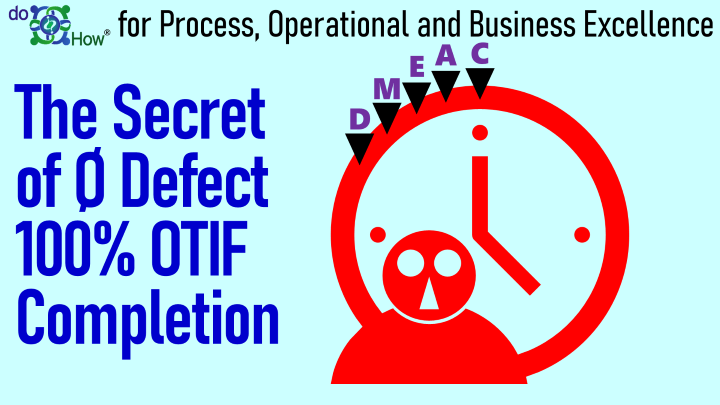
At the heart of operational excellence lies a surprisingly simple, yet powerful discipline: every employee must maintain a real-time overview of all their tasks—what needs to be done, by when, and how far it has progressed and when is it expected to be completed. Think of this as their personal compass—a living, breathing map that updates with each step taken. But what makes this map truly powerful is the ability to track five specific dates that together tell the full story of a task is journey:
The Five Milestone Dates Every Task Must Have
1. Desired Completion Date (D) This is the ideal target—what the customer or stakeholder wants. Like the dream arrival time on a long road trip, it reflects aspiration and convenience. It sets the tone for urgency and aligns with expectations, even if it may not always be realistic.
2. Committed Completion Date (C) This is the date an employee or team promises to deliver. It represents an agreement—a handshake of accountability. It is where capability meets responsibility, and the organisation begins to plan its next steps based on this promise.
3. Aimed Completion Date (M) This is the internal goal—sooner than the committed date. It reflects professionalism and pride. Teams that operate at world-class levels always aim to finish earlier than committed, creating buffers and ensuring excellence without last-minute stress. It is like aiming to submit the answer sheet in an exam 10 minutes before the closing bell, so that we get to submit even when we need a couple of more minutes to answer a tough question.
4. Expected Completion Date (E) This is the dynamic estimate—constantly updated as work progresses. Like a GPS recalculating your arrival time based on traffic, it gives the real pulse of execution. If the expected date slips beyond the committed date, a red flag must go up. This is the early warning signal—the opportunity to act before it is too late.
5. Actual Completion Date This is history—the moment the task is truly done, of course, with zero defects, queries or clarifications. It allows for reflection, learning, and improvement. Comparing actual with expected, committed, and desired dates helps teams understand their performance maturity and plan better in the future.
Why Tracking These Dates Is So Important
1. Deadlines Drive Dependability When employees know the desired and committed dates, they align their efforts to deliver value on time. When they aim for earlier completion and continuously monitor their expected date, they ensure reliability and buffer for surprises.
2. Proactivity Prevents Firefighting The expected date, when compared with the committed date, reveals problems before they explode. If slippage is detected, it is not a reason to panic—it is a chance to reprioritise, escalate, or seek help. That is the beauty of real-time awareness.
3. Transparency Builds Trust Shared visibility into where tasks stand—what is delayed, what is at risk, and what is done—creates a culture of openness. With every task clearly tagged with all five dates, team members and leaders can plan, coordinate, and respond with agility.
4. Clarity Enables Focus When an employee is task list is just in their head, priorities get scrambled and stress creeps in. But when it is laid out—with due dates and progress against each one—they can focus with calm confidence. It is like clearing a foggy windshield before driving.
5. Reflection Fuels Improvement Over time, comparing actual dates with expected and committed ones shows patterns—are we underestimating work? Is a particular team always lagging? This analysis becomes the bedrock of continuous improvement.
Then Why Isn’t This the Norm?
Despite its simplicity and power, many companies fail to instil this discipline. Here is why:
1. The Illusion of Busyness Many say, “I’m too busy to update my tracker,” mistaking motion for progress. But just as a pilot can’t fly safely without instruments, no professional can excel without a clear view of their workload.
2. Tool Overload or Lack of Tools Either there is no tool at all, or there are too many. Complexity breeds avoidance. The solution must be light, mobile, and intuitive—like using Google Maps for your workday.
3. Cultural Fear of Exposure In some environments, showing delays feels risky. Instead of celebrating transparency, the culture penalises deviation. So, employees stay quiet, and issues only surface when it is too late.
4. Leaders Don’t Practice It Themselves If managers don’t track their own tasks or review the five key dates, why should anyone else? Culture flows from the top.
5. Short-Term Wins Over Long-Term Discipline When today is crisis always gets priority over tomorrow is planning, the discipline of task management dies a slow death.
What Managers Can Do to Build This Culture
1. Make It Mandatory and Meaningful Every task should have these five dates—desired, committed, aimed, expected, and actual. Managers can regularly insist seeing the entire task list with this structure and explain the “why” behind each.
2. Use Short, Regular Review Rituals Daily 10-minute check-ins or weekly syncs should focus on changes in expected dates, reasons behind them and how to resolve them. Managers can treat these sessions as opportunities for navigational corrections instead of just audits, which may initially be necessary to kick start this routine.
3. Select Simple, User-Centric Tools Pick platforms that mimic popular apps—lightweight, intuitive, and mobile-first. Let technology serve humans, not the other way around. Managers can encourage their young geniuses to prepare the process document and develop these apps using the low-code-platforms, as described in my last week’s article.
4. Model the Behaviour Leaders should maintain their own visible task trackers with the five dates and openly discuss delays and recoveries. Vulnerability is a powerful teacher. Managers can start by showing their tracker with these 5 dates during routine huddles. I remember showing my handwritten to-do list, my outlook task list or my email follow-up with flags during meetings to my team and now to my clients.
5. Celebrate Predictability, Not Just Speed Instead of only rewarding fast deliveries, also appreciate those who honour their commitments consistently. Stability is the true hallmark of maturity. Managers can recognise top performers, every month, for consistent on-time-in-full completion with zero defects, queries or clarifications.
6. Create a No-Blame Learning Culture When an expected date slips, ask “What can help you?” instead of just asking “What went wrong?” Mistakes are inevitable—learning from them is a choice. Managers can also recognise employees, every month, for timely escalations, not upward delegations or passing the buck though, to seek additional support and finally complete as committed.
Every employee is like a mountaineer navigating a steep climb. The five dates—Desired, Committed, Aimed, Expected, and Actual—are their altimeter, compass, and weather app all in one. Without them, they’re climbing blind.
To create high-performing, self-driven teams, organisations must start with this foundational habit: a real-time task tracker with visibility into the five milestone dates. It is not just a project management tactic—it is a mindset of discipline, proactivity, and ownership.
How are you managing your tasks and how are you insist seeing the entire task list of your team and supporting them to consistently deliver on-time-in-full with zero defects, queries or clarifications?
Happy reading!