
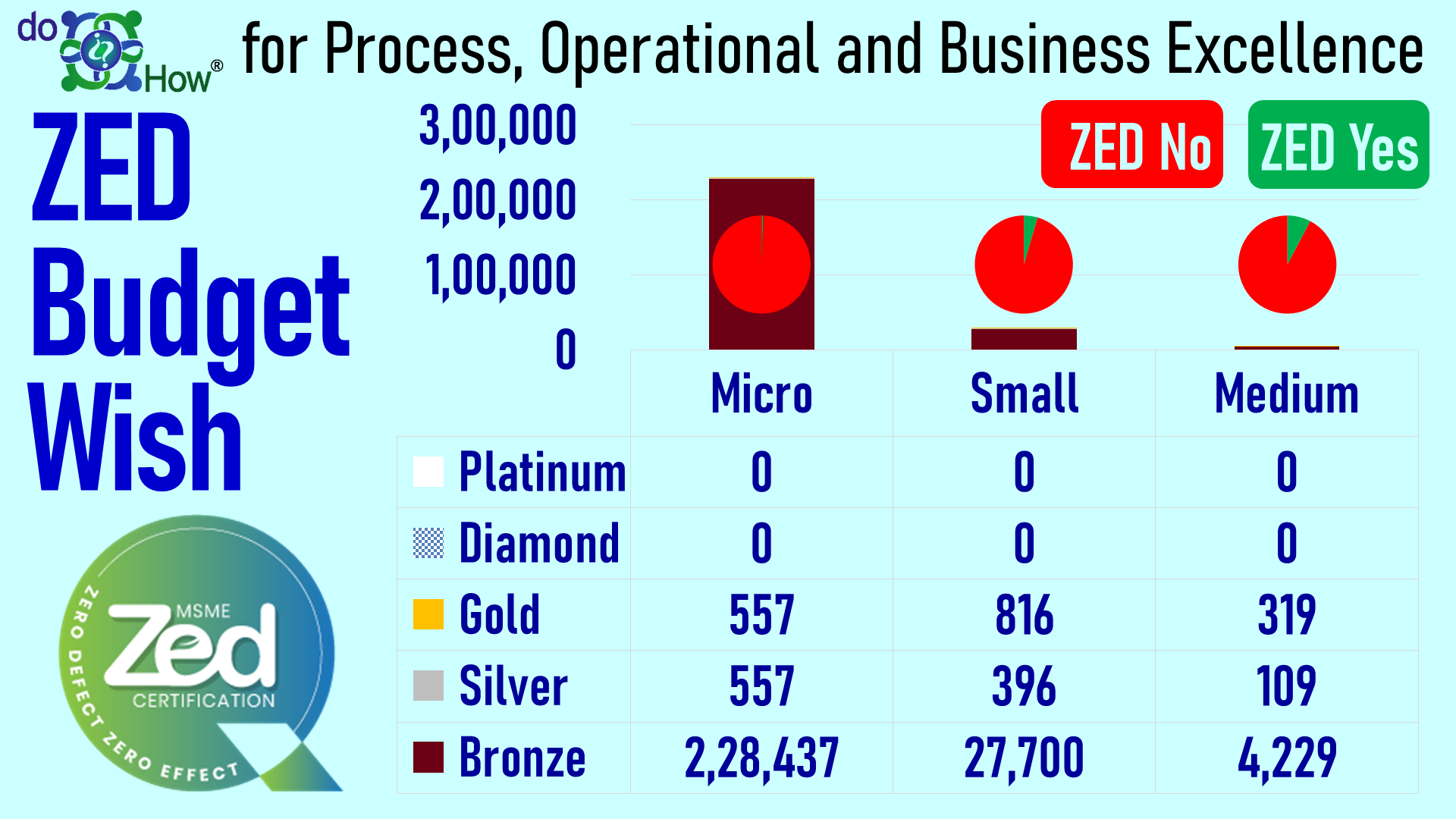
Last week, I penned my thoughts on Unleashing Excellence in Indian Manufacturing as we marked the 76th Republic Day of our great nation. Today, I wish to shine a light on an unfulfilled dream—one that has been lingering in the shadows for nine years since the launch of the ZED (Zero Effect, Zero Defect) scheme by the MSME Ministry of the Government of India. Like a carefully designed but underutilized bridge, the scheme was built to propel Indian manufacturing toward world-class standards, offering generous subsidies as stepping stones to excellence. Yet, once again, I find myself looking at the Budget with a sense of déjà vu, as the much-needed push for excellence in our manufacturing sector—a key pillar for realising greater than 8% GDP growth for the Viksit Bharat dream by achieving 25% of GDP contribution and massive employment generation—remains absent.
The Dawn of a Promising Journey
My tryst with the ZED movement began in March 2017, when I was among the first batch of certified ZED assessors. The air was charged with ambition, as we envisioned a manufacturing sector that could stand shoulder to shoulder with global giants. The idea was simple yet profound—help India’s MSMEs embrace world-class manufacturing, ensuring quality without compromise and growth without harm.
Fast forward to today, and the results on paper appear spectacular. Against an initial goal of certifying 22,222 MSME companies, as of last night we now boast 2,63,120 ZED-certified companies—a staggering achievement, a testament to the willingness of Indian enterprises to rise to the occasion. However, much like a grand staircase with the majority stuck on the first few steps, 98.9% of these companies remain at the lowest Bronze level, with less than 1% reaching Silver or Gold, and none attaining the pinnacle of Diamond or Platinum (The top levels envisaged in the original model).
Anomalies in the Climb to Excellence
A curious statistical quirk presents itself—there are more Gold-rated companies (0.6%) than Silver-rated ones (0.4%). It’s akin to finding more eagles at the mountaintop than halfway up the peak. This suggests an overly generous inclination from assessors, perhaps giving companies the benefit of the doubt rather than rigorously ensuring that only the truly deserving advance. Despite the scheme’s well-structured Web and Mobile APP based three-step assessment—Self-Assessment, Desktop Assessment, and On-Site Assessment—the empanelment process for assessors may need recalibration to ensure better fairness, firmness and competence in evaluations.
Refining the ZED Model
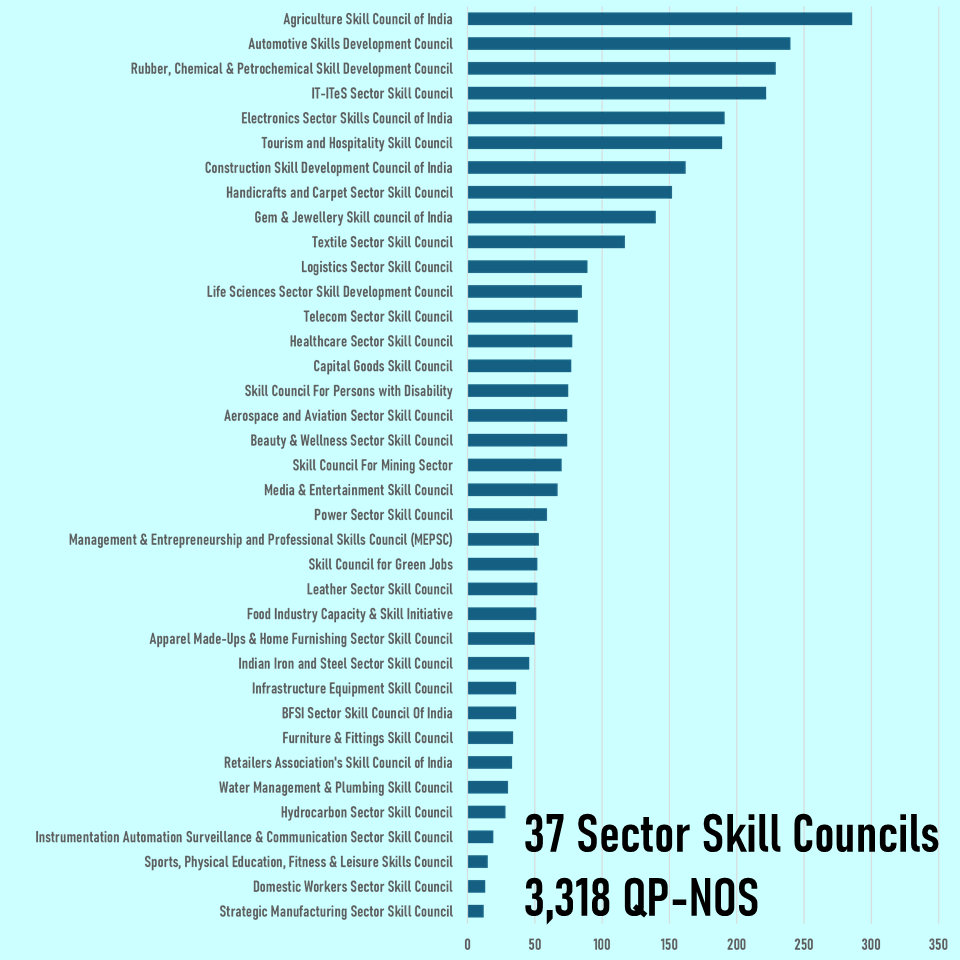
Based on these outcomes, the ZED framework itself requires refinement. It must evolve into a more comprehensive, objective, and industry-aligned system. One way to achieve this could be by integrating the National Skill Development Corporation’s Qualification Pack—National Occupational Standards (QP-NOS), a repository of 3,318 meticulously defined job roles, as of last night, across 37 Sector Skill Councils, by the respective Industries. By doing so, we would create a more holistic evaluation system, one that truly measures a company’s capabilities, processes, and excellence. We could be leveraging the latest GenAI developments to actually converse and guide our workforce every day in a language of their preference using technology, based on the respective QP-NOS.
Some others would be to enhance the focus on digitalization and end-to-end supply chain visibility, ensuring that every component of the manufacturing process is transparent and optimized. Rolling planning of production would enable manufacturers to adapt swiftly to market demands, much like a seasoned sailor adjusting sails to changing winds. A structured performance management system with real-time dashboards for key performance indicators would act as the guiding compass, ensuring that companies stay on course toward excellence.
Additionally, the integration of peer feedback, one-on-one dialogues, and self-regulated teams with a daily pledge would cultivate an environment where improvement is continuous and organic. Encouraging agility through skip-level meetings, system and process audits, and regular retraining would ensure that manufacturing units do not become stagnant but evolve with the ever-changing industrial landscape. Lastly, the introduction of stakeholder delight monitoring would reinforce the philosophy that true excellence is not just about numbers but about creating lasting impact and satisfaction for all involved.
The Road to Global Competitiveness
From my experience, companies operating at the Diamond and Platinum levels—whether ZED-certified or not—are already excelling in foreign markets, leveraging their superior quality and efficiency to achieve sustainable and profitable growth. It is a well-known truth among industry experts that employment generation with better incomes is intrinsically linked to our ability to export high-quality manufactured goods.
If we combine these insights, a clear vision emerges: Diamond and Platinum-level companies will not only contribute more to the national exchequer and exports, but will also create more high-paying jobs for India’s aspiring youth. If these companies are our engines of prosperity, shouldn’t we be fueling their journey?
A Bold Proposal for the Budget
Imagine, over and above the existing incentives, if we incentivized excellence directly, not just participation. What if companies that achieve Diamond and Platinum ZED certification were rewarded with reduced corporate taxes? Just as a sculptor chisels away the excess to reveal a masterpiece, our policies should carve out incentives that motivate companies to aim higher, strive harder, and excel further.
Conclusion: The Call for Action
The ZED scheme was envisioned as a launchpad for Indian manufacturing, but instead of taking off into the stratosphere, most companies remain taxiing on the runway. It’s time we revise our flight plan. The Budget is not just a financial document; it is a blueprint for the future. By offering real, tangible incentives for excellence, we can transform our MSMEs into global powerhouses, ensuring that Indian manufacturing doesn’t just participate in the world market—but dominates it.
The seeds of greatness have been sown. Now, let us water them with the right policies, nurture them with incentives, and watch them bloom into a thriving, world-class manufacturing sector. The time to act is now.
What are your ideas to encourage the MSME manufacturing companies to reach world class levels, increase their exports, and offer employment opportunities with better salaries for our aspiring youth?
Happy reading!
Just a question – are the logistics and the red tapeism an issue for smooth working?
In my opinion both logistics and red tapism are in the circle of concern. Considering the effective principle of staying within the circle of influence, companies have the liberty and autonomy to evolve on their excellence journey with the ZED model. Once world class, the other issues in the circle of concern just vanish.
Nicely scripted Dinakar. Opportunities are created, it is now or never for MSME to utilise the opportunity. My view is that the Industry has to stick to basics to excel and nothing special is needed. We need to all join for creating good impression about the capabilities from India.